What We Owe Our Children – In Memory of Yaron and Sarah z”l

Just two days ago, I sat with an Israeli couple—first-time parents of 10-day-old twins. Two men, who had found a surrogate in the U.S. to carry their children. One baby nestled against their chests in a carrier, the other cradled in their arms. I was there as part of the beit din, the panel of witnesses for the babies’ conversion.

Before the ritual began, I asked them what they hoped for their children. I expected the usual: health, happiness, love. Peace. And yes, they did mention all of those. But the first thing they said was: “That the hostages come home very soon.”

Two men, holding their tiny, floppy, perfect newborns, just beginning their lives as parents—and their thoughts turned immediately to others, to those taken from their homes, to the ache of a country and an entire people still waiting. I was deeply moved.

Hours later, as the Knicks game went into overtime, the news broke. Two young Jewish adults, Yaron Lischinsky and Sarah Milgrim, shot and killed outside a dinner in DC for young professionals and diplomats. The event was organized by the AJC and focused on interfaith understanding and Israeli-Palestinian coexistence. The killer? Another young man, armed with a gun and radicalized by hate. He shouted “Free Palestine” as he was arrested and said he “did it for Gaza.”

It is tragic. It is heartbreaking. And it is not the world we want to be living in. Not for ourselves, and not for our children.

I’ve spent the past few Sunday mornings with our teens, trying to help them make sense of the moment we’re in. Trying to make sense of it together, actually. Zionism. Israel. Antisemitism. The war. The narratives. The fear. I organized the conversation around the documentary October 8, with Noa Tishby’s book on Israel as a reference for the discussion. As I turned off the lights and pressed play, I started to cry. I whispered a silent apology to the students, that this was the conversation we had to have. I choked up again later, when three-fourths of them said they had experienced antisemitism firsthand.

At the end of our final session, one of the teens raised his hand and asked, “Rabbi, what can we do about it?”

That’s the million-dollar question. I didn’t love my answer, to be honest. The question is so right-on and huge. It’s the one that keeps me – and so many of us – up at night. What can we do about it? So I will try again, another answer, one I keep coming back to.

Show up for the Jewish people.

Need a mantra? Go back to the words of Hillel: If I am not for myself, who will be for me? But if I am only for myself, what am I? And if not now, when? (Pirke Avot 1:14) To which the 15th century Italian scholar Ovadiah ben Avraham from Bartenura commented: אם אין אני זוכה לעצמי מי יזכה בשבילי – If I do not merit for myself, who will merit for me?

What is our merit in all of this?

Our merit is that we know: no one else will hold their babies and pray for strangers who need the Jewish people’s help. No one else will keep synagogues open and thriving. No one else is making shabbat dinner and lighting candles and blessing their children using the age-old formula given by Torah. In other words, no one else will keep Jewish life alive for us. If we don’t act for ourselves, who will?

But that is not the whole formula. From that place of self-care, we can move outward to help all those in need. Like putting on the oxygen mask in the airplane, we take care of ourselves so that we can care for others next. We cannot skip the first part. But the second part is key, too.  

To the teens graduating high school this spring: when you get to college, don’t sit out the Jewish stuff. Go to Hillel, Chabad, whatever is offered on your campus. Put a mezuzah on your dorm room door. Be a part of it. If you are not for yourself as a Jew on campus, who will be for you? And then, go out and be an activist on campus for all the other causes that move you. As a proud Jew, go fix the world.

To the rest of us: no more “I’m Jewish, but not really into it.” No more “They go to synagogue, they buy kosher meat, they give to Jewish causes, but I don’t really do that stuff.” Fill in the blank for who “they” are—maybe it’s the orthodox, or the cousins you never really liked, or the people who always seemed a little too into it. You know, the rabbi and cantor. But here’s the truth: Am Yisrael Chai—the Jewish people live—only if we keep living it.

Give to Jewish causes. Spend time with Jewish community. Learn Jewish texts. Come to the Shavuot picnic and maybe revisit services, too. Cantor Kissner and I run a good one (lay-led shabbat tomorrow, to give fair notice) and if you don’t come, who will? If you don’t give—of your time, your talent, your energy—then what can we say to our children? That once it was wonderful to be Jewish in America, but we gave it up? 

And then: put on your yellow pin or yarmulke, your Magen David or “bring them home” dog tag—and show up for others, too. This is a time of fear and fragility for so many. The world needs our courage, our help, our healing. Let our yiddishkeit (Jewishness) be the reason we rise to the moment.

I don’t know what the legacy of Yaron and Sarah z”l will be. I don’t know what those tiny babies at the mikveh will grow up to do. But I do know this: we owe them something. We owe them Jewish community that is vibrant, healthy, safe. We owe them the effort of not giving up and doing our best to make things better. We owe them a world full of love, goodness, and peace. We owe them a lot. May we merit to do all that we can.

PS: I found the Muslim Public Affairs Committee’s statement about Wednesday’s tragedy comforting and hopeful. To be clear, the MPAC is not a Zionist organization and much of their rhetoric criticizing Israel’s actions in Gaza is strident. But as many of us wonder where voices of our allies and neighbors are, this felt like a spark of hope worthy of sharing.

Note: this essay also appeared in the Jewish Standard on May 30, 2025: https://jewishstandard.timesofisrael.com/what-we-owe-our-children-in-memory-of-yaron-and-sarah-zl/

Iyar and May:  Perfect Together


How enriching to live by two calendars! However, it’s also confusing: try to explain the Jewish calendar and the secular calendar and their relationship to the moon and the sun.

Just as our two calendars are entwined, the stories of the U.S. and Israel share common points of contact.

We are in the midst of May and Iyar, months that are significant to both Americans and Jews. May has been for the last decade or two designated Jewish American Heritage Month by presidential proclamation, celebrating the accomplishments of Americans Jews in the context of American history.

Iyar marks Yom Hazikaron, Yom Haatzmaut, Pesach Sheni, Lag BaOmer, and Yom Yerushalayim. No wonder May was chosen for Jewish American Heritage Month.

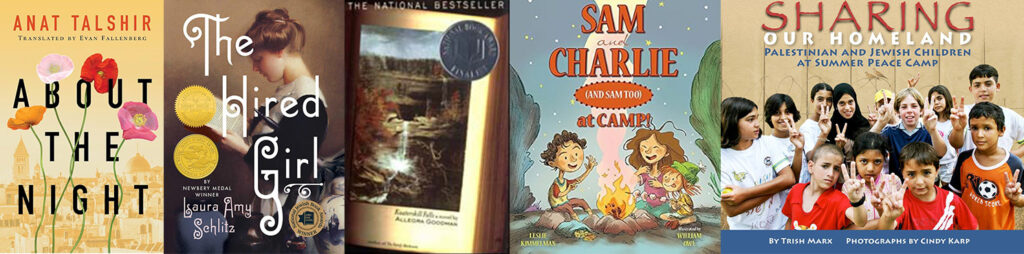
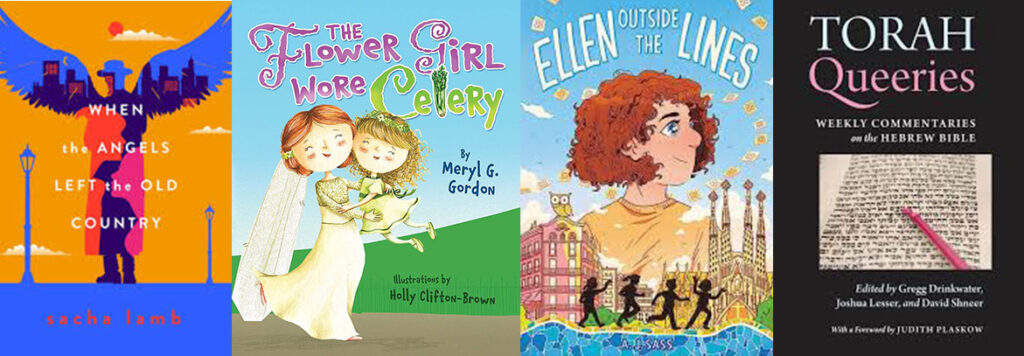
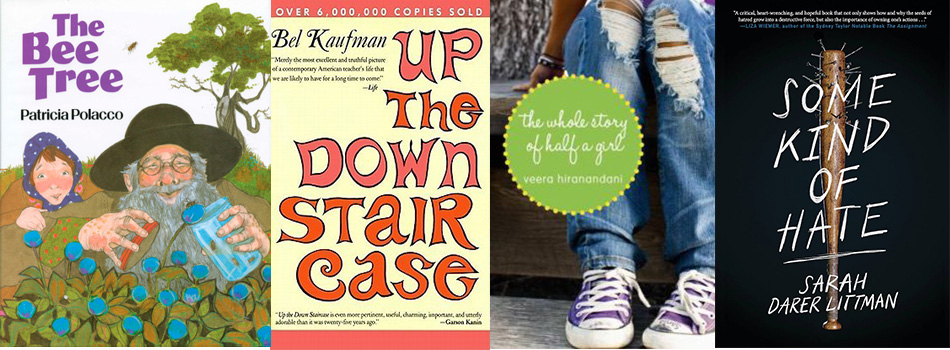
Our library is filled with books that show the intersection of both the American (U.S.) and Israeli stories. Although many of the books listed below were written for children, they are rich with facts and details that will appeal to older reader, including adults.   Check the library catalog for more.

Koffsky, Ann. The Peddler and the President relates the efforts that President Harry Truman’s lifelong friend , Jewish Eddie Jacobson, made to convince the President that Israel should become a state. Young readers are targeted but older readers will be carried along by the tension in the story and the depth of the friendship between the two men. (J)

Klagsbrun, Francine. Lioness: Golda Meir and the Nation of Israel is a comprehensive look at Israeli’s fourth and only female prime minister.

Krasner, Barbara. Goldie Takes a Stand: Golda Meir’s first crusade looks at Meir’s childhood in Milwaukee where at the age of nine she organized the community to raise money to buy textbooks for immigrant classmates. Meir spent many years in the U.S. before moving to Israeli and eventually becoming Israeli’s prime minister. (J)

Lapid, Lihie. On Her Own is an intense novel of a run-a-way Israeli  teen who is taken in by an elderly woman whose granddaughter she pretends to be as she hides out after witnessing a murder. A beautiful relationship grows between the two until the woman’s son, who lives in California with his family, threatens to destroy it.

Lehman-Wilzig, Tami. On the Wings of Eagles tells the story of the rescue of a group of Yemenite Jews by an  Alaska Airlines pilot. This picture book is based on a real incident during Operation Magic Carpet, an international effort that rescued nearly 50,000 Jews from Yemen in 1949 and 1950. (J)

Nathan, Joan. My Life in Recipes reveals the famous cookbook developer’s early career in Israel working in Jerusalem.

Newman, Tracy. Itzhak: A Boy Who Loved the Violin is an inspirational picture book biography of Itzhak Perlman,  the child prodigy violinist,  who found fame in the U.S. while learning to accommodate the effects of polio. (J)

Yaron. Lee. 10/7: 100 human stories of the October 7 attack won the 2024 National Jewish Book Award. When the attack occurred, Israeli journalist Yaron was on a fellowship at Columbia University.

Sardines, Secrets, and Loving Thy Neighbor

One of my favorite games as a kid was Sardines. The inverse of hide and seek, in this game only one person hides, and everyone else searches. The fun comes upon discovering the hidden one: when you find the person hiding, you have to surreptitiously join them in their spot. As the game goes on, that one person hiding under the bed or in the closet all alone is joined first by one, then two, then three… when finally the last person arrives, everyone playing finds themselves huddled up there together, smushed into some tiny space like sardines in a tin.

I’ve been hiding. It’s been weeks since I’ve written. First it was Pesach (Passover), then it was a funeral week, then I had classes to prepare and teach. New week, new excuse. Legit. And also, not legit, because… I was hiding. Unsure what to offer, unsure how to initiate the seeking, unsure how to keep showing up. 

Each of us hides from one another in a million ways. There are pulls on our time, and then there’s the psyche. We hide from ourselves as much as from one another. We want connection, to be found in our alone-ness and to have friends show up wanting to be close with us. And also, we want to be alone, separate and solitudinous. 

The seeking part is a solo endeavor, too, even though we’re all doing it, all the time. Secretly searching for something in life: love, a job, more money, more meaning, God, or the dessert you don’t want to be seen sneaking after dinner.

“Just as the Holy One sees but is not seen, so too the soul sees but is not seen.”
– Midrash Tanhuma, Pikudei 3

We are now (in the parasha cycle) just past halfway through Leviticus, that is to say, halfway through the Torah. Here we encounter those foundational verses at the center, the Holiness Code of chapters 19 and 20, ethical injunctions like: Tell the truth. Do not steal, do not put a stumbling block before the blind, do not make a strong animal work alongside a weaker one. Pay your workers on time and leave the corners of the field for the poor. And the climax: “Love your neighbor as yourself; I am YHVH.”

Only the Holy One sees whether we’re living up to this or not. Our actions might indicate our emotions, but they could be just for show. Love is hidden inside where no one sees it, and we sneak it around with us as we hide and seek. Along with so much else our souls hold, invisible. 

Loving your neighbors: what a search we are on for that! Searching for people who love us, searching for love in our own hearts for those around us, whether we like them or agree with them or share sugar and eggs or just bicker over the leash laws.

The incomparable Avivah Zornberg writes of this week’s parasha (in The Hidden Order of Intimacy): “This neighbor – who has every reason to be wary of you; who may need to be protected from your aggression; who may be of a different gender; who may be a man condemned to death, or a revered father – this neighbor is profoundly connected with you. In theological terms, the connection is rooted in the idea that both were created in the image of God… The [neighbor] is just like you – precisely in the sense that he, too, has blind spots, points of failure, that make him both threatening and unbearable. But precisely here begins a specific way of opening to the Other in the place and time we already inhabit” (emphasis mine).

In the place and time we already inhabit! As in, we don’t need to go off searching for the perfect hiding spot. We’re already here, in the place and time we inhabit, with the people right here in our lives already. Like in the legends that exist in every culture, including Judaism, about the guy who goes off to find the gold hidden someplace far away only to learn that it was there under his floorboards the whole time.

Turns out, too, that even as we play this game of Sardines our whole lives, we are also playing another game, the aptly named game of Life. As kids we also used to play that, but it was about money and there was only one winner and it was much less fun. 

My hiding soul is searching for yours. I hope we find each other, or maybe what I mean to say is that I’m glad we are searching for each other. I’m glad we are neighbors, aspiring to love one another. I’m glad we can aspire together to love our neighbors, to search for people hidden in all sorts of places – people waiting for our love, waiting for us to find them.

49 Steps to Strength: Join My Omer Fitness Challenge

[Editor’s note: you can watch Rabbi Treu explain the Challenge in a short video here.]

What’s holier, working out or praying?
Who’s in for a spring fitness challenge with me?
What does any of this have to do with Passover?

Of all of the spiritual practices in the Jewish canon, exercise is perhaps our most neglected. We’ve come to separate our bodies from our souls, and both, all too often, from Jewish life. The gym (the walk, the Peloton, whatever) feels like an obligation; spiritual practice, optional… and Jewish spiritual practice a question mark. We think yoga is Buddhist or Hindu (I mean, it was, originally), that “going to services” is the hallmark of Jewish spirituality, and that Jewish embodied practice is bagels and kugel.

But what if it turned out that the fitness commitments you have or want to nurture in your life are also part of the Jewish practice you seek?

In Jewish thought, our bodies are sacred. Maimonides, a 12th-century physician and Torah scholar, taught: “Since a healthy and whole body is necessary for the ways of God – for it is impossible to imply or know anything of Godly wisdom when one is sick – therefore one must distance oneself from things that are damaging to the body and accustom oneself to things that strengthen and make one healthy.” (Mishneh Torah, H”D 4:1). “Guard yourself and guard your soul very carefully,” the Torah teaches (Deuteronomy 4:9). “’Guard yourself,’” wrote the commentator Kli Yakar in the 17th century, “means taking care of the body.”

It’s spring, and it’s almost Passover, and that means we are about to have this incredible opportunity to explore connecting our bodies and our spirits. We will eat differently for eight days, starting with the seder. It’s the original spring detox. The Torah is telling us to re-evaluate our eating habits by intentionally choosing what we’re going to eat for eight (seven, in Israel) days. Now those eight days are a holiday, and we can choose to indulge as part of the celebration; but those eight days are the beginning of a longer period of spiritual practice… and that’s where this health commitment thing comes in.

On day two of the holiday, we begin counting the omer. Every night, we say a blessing and count. (Literally. Today is day one, etc.). We count for seven weeks, and after we we get to forty-nine (seven weeks x seven days), we have our next holiday: Shavuot. (At Oheb, Shavuot starts this year with a big picnic bash, June 1, save the date!). The period of counting is designed as a finite seven-week period for spiritual journeys. This year, I’m making mine a “body and soul” practice. A spring refresh on the health and exercise front. Who’s in?

I’m calling it The Omer Challenge: 49 Steps to Strength, and here’s how it works:

1. Set your own goal. Maybe it’s increasing your step count, or exercising daily, or laying off sugar, or going vegan. You do you. After all, we will be a group in which some of us will be nine years old and some of us 99! Each of us made in God’s image, with different ailments and abilities. Pick something that suits you to take on during the Omer (that’s this 49-day period of spiritual practice) this year.

2. Join me on WhatsApp. (Don’t do What’sApp? Download it here or in the app store. If you need help, let us know.) You can join the group here. Every day for 49 days, post in that group. There we will cheerlead one another and celebrate our health and every step we take in this body and soul fitness challenge.

3. Over the course of the 49 days, I will be offering Torah to keep us inspired to meet our goals. And of course, we will count the Omer together each day, matching our spiritual practice to the embodied. We’ll have a few meet-ups and check-ins along the way in person, and then at the end, we’ll come together over Shavuot to celebrate the blessing of our bodies and health.

Studies show that having a fitness partner increases fitness goal achievement by 95%. Any Jew could have told you that, as we know that community keeps us strong. And believe it or not, studies show that people who are in an online fitness group (like our WhatsApp group) are 65% more likely to stick to their exercise goals compared to people who are doing their own routines at the gym. So, even if we’re working out asynchronously, as long as we hold each other in community, we are 65% more likely to stick with it – and will be fostering a sense of Jewish community with one another as we go.

Passover is just two weeks away. If you haven’t started yet, now’s the time to clean your home, plan the seder, and prep your food for the week. Last year Leydi Rofman and I made a bunch of videos teaching us how to do that, which you can watch here. This year, as we think about getting ready for the holiday, the invitation is to choose a fitness goal and make that the centerpiece of our spring communal journey together. The 49 Steps Omer Fitness Challenge will, I hope, also be 49 days of friendship and fostering community in new ways.

P.S. All you need to get ready for Pesach, including the form to sell your chametz and instructions on what to do since Erev Pesach falls on Shabbat this year, can be found here.

Dressing up Antisemitism

Antisemitism is a shape-shifter. Right now, its form is anti-Zionism. This is what is top of mind for me right now. I just learned something new: that it was the Soviet propaganda machine that first swapped the word “Zionist” for “Jew.” The blood libel, the accusation of dual loyalty, the myth of secret power? The Soviets made it all about Zionists instead of using the J-word. In a post-Holocaust world, in which saying things about Jews was no longer in good taste, the rebrand stuck. If you’re going to click through to anything here to read next, that’s the one. Unless you read this one instead: Why This Was the Worst Week in Antisemitism – Until Maybe Next Week. (Look what I just did there: sent you to both the right-leaning Tablet and left-leaning Forward. Turns out being a purple congregation is irrelevant when it comes to this topic.)

This week, I spent two days with 125 rabbis at a conference on Zionism and what this moment requires of our leadership. My thoughts, ideas, and learning filled an entire notebook. The first draft of this blog can be found here; it is the actual list of the Top 12 Things I Learned about Zionism This Week. I wrote it yesterday, and by the time I went to bed, I knew I wouldn’t send it. Because the heart of matter is not the list of facts or actually about Zionism or Israel at all.

The heart of the matter is this: the shape-shifted antisemitism of our day is now dressed up as a principled, moral social justice stance about Middle East politics; it is actually the rejection of Jews and Jewish concerns in our own nation. To be sure, there is also the old-school white nationalist Jew-hate as well, but that we know how to wrap our heads around. This Zionism thing feels new and has us spinning in all the wrong ways, because it is a distraction from the heart of the matter. The heart of the matter are the questions which right now are everything for towns like ours, the questions we must keep bringing the conversation back to over and over again: What does racial justice and inclusion look like in towns like ours – in an America – that combines Palestinians and Israelis, Jews and Muslims, and people of a wide range of commitments and ideas? In what ways are Zionists valued and treasured in this mix? 

When God calls to Moses from the burning bush and tells him to go save the Jewish people, Moses resists. Moses argues that the people will never listen to him, that he’s slow of speech, that it will never work. Which, as Rabbi J.J. Schachter taught us in a hotel conference room this week, is nuts, since the only reason Moses was out there in the desert tending Yitro’s sheep in the first place was because he himself saw the suffering of the Israelites, killed a man who was beating a Jew, and then fled the scene. So he knows the people are suffering. Dear God, he says, don’t send me! According to the Talmud, Moses spent a whole week arguing with God, that God should send Elijah the Prophet to save the Jews instead.

What about us? We (and at this point Rabbi Schachter had worked himself up, shouting so loudly that security actually came in to check in on things) must argue not just for a week, but for all eternity that God help us, that God should send Elijah, that God should redeem us, bring back the hostages, end the suffering, end the war, over and over again, for all eternity, that is our role as Jews. To insist that God show up and do god-like things. But God refused, and God refuses. Instead, God sent Moses. Eventually Moses got the message that it was up to him. Now it is our turn. It is up to us.

The Top 12 Things I Learned About Zionism This Week

Earlier this week, I joined 125 rabbis at a conference entitled Zionism: A New Conversation. I filled a notebook with information and ideas. Here are my top 12.

1.    Antisemitism is a shape-shifter. Right now its form is anti-Zionism. It was the Soviet propaganda machine that first swapped the word Zionist for Jew. The blood libel, the accusation of dual loyalty, the myth of secret power? The Soviets made it all about Zionists instead of using the J-word. In a post-Holocaust world in which saying things about Jews was no longer in good taste, the rebrand stuck.

2.    It is easier to retain moral purity when you hold no power. Powerlessness has become romanticized, because when you hold power you have to make hard ethical decisions.

3.    Gaza is excruciatingly tragic. In Gaza, Haviv Reteg Gur argued, Israel’s victory is total and will be complete, and it is tragic. Some wars, he noted, are won and it feels morally wonderful. This war may be won, or not, but if this is victory it feels awful. It is awful. The worst part? Because Israel is fighting an enemy who vows over and over again to destroying Israel (to be clear: that sentence was about Hamas, not innocent or peaceful Palestinian people caught up in this), there is no choice. That is tragic, too. We should rend our clothes and sit in ashes and mourn the tragedy for what it is. (That last point is mine, not Gur’s. I think we can hold both responsibility and mourning in this very complex geopolitical situation. The midrash about the Egyptians drowning in the sea has God scolding the Israelites for celebrating when their enemies suffered.)

4.    The younger you go, the less people know what Zionism or anti-Semitism are. Prof Rachel Fish’s work has shown that among 18–34-year-olds asked to rank forms of hate, hatred of Jewish people is not cool… but hatred of the state of Israel, and the belief that the state of Israel shouldn’t exist, rank as super cool. This is true across all religious lines including evangelical Christians… and Jews. For Jews under age 40, the majority believe that Israel complicates their lives and embarrasses them.

5.    Particularism v. Universalism. Part of what’s going on with that is that in order to be part of the universal, you have to check your particularism, if you’re a Jew. For example: in order to be part of the LGBTQ+ club at college, or the climate club or whatever, you have to disavow Zionism. You can’t be a Zionist and part of those clubs at most places these days. That includes SOMA, by the way, where it is increasingly hard to participate in the progressive activist community and also a committed Zionist. The pressure is on to eschew the Jewish and/or Zionist part. At UCLA, a student had to drop out of the race for student government last year because she’d been on a Birthright trip to Israel. Anti-Zionism has become a litmus test for progressivism. Zioness is doing great work here.

6.    No more outsourcing the education of our children on these issues. Statistically parents of kids and teens do not have the knowledge they need to feel competent on Israel history and Zionism. Advocacy, it was powerfully noted, is not education, and our kids watching us advocate is not the same as our kids absorbing our knowledge.  I’m putting together a class on Parenting in an Anti-Zionist World to help us here. Register here [make up a link please] to express interest for when I’m ready to get it going.

7.    What we need on university campuses: a) bridge-builders. Our kids can be that, but only if they know who they are and are solid in their knowledge and values. B) Faculty appointments need to be diversified so that the lens of settler-colonialism (currently the only approach in most humanities departments to the topic) is only one of many ways that professors have studied and look at Israel. C) most of all, we need to keep sending our kids to these schools despite the ruckus. As Columbia Law School Professor David Schizer put it, in 30 years, we want our Secretary of State to be someone who has Jewish friends (or is Jewish themselves) – not someone who has never met a Jew.

8.    It’s not conspiracy, it’s incompetence (on campuses), and ignorance (online). People aren’t trying to be anti-semitic. People aren’t doing the research and then deciding to say things that are repetitions of age-old myths about Jews. They just don’t know.

9.    The strategy of ingratiating ourselves to our host communities, which has been the strategy of the American Jewish community, has become obsolete. Bret Stephens put it this way: we want to be Jonah Salk inventing world-saving medicine; or Julius Rosenwald, quietly funding historically black colleges; or Jerry Seinfeld, entertaining millions. None of them made being Jewish part of their public persona. Things are different now. We need to show up as proud Jews, as proud Zionists, as people who may criticize Israel or its government or policies…or not…but who are committed to the safety of the Jewish people in all the places we reside.

10.  The ideology behind the protests has inspired people to give. All those tents on campus last spring were new, and identical. Someone donated and shipped them. Student Justice for Palestine’s social media went dark in May 2023, and turned back on again on…October 6. There’s a lot of money behind all of that. We have to match it. It’s good to give to world causes, but right now the Jewish people needs us.

11.  We need to prioritize Jewish community over the other community circles in our lives. Not because those other circles are not important. But because right now we need each other. The way we stay strong individually as by showing up collectively. So… keep showing up. I’m being super specific here: show up at Oheb. If you’ve stopped coming, it’s time to come back. If you’ve stopped giving all you can, start. Pick the thing – minyan, First Friday, shabbat, a class, volunteering, an additional free will gift, all of the above. It’s the #1 thing you can do for the Jewish people right now because it’s the most local source of strength we have. Our bridge-building only works if the abutment is firmly rooted in place. First we ground then we build across the divide.

12.  When God called to Moses from the burning bush and told him to go save the Jewish people, Moses resisted. Moses argues that the people will never listen to him, that he’s slow of speech, that it will never work. Which, as Rabbi J.J. Schachter taught us, is nuts, since the only reason Moses was out there in the desert tending Yitro’s sheep in the first place was because he himself saw the suffering of the Israelites, killed a man who was beating a Jew, and then fled the scene. So he knows the people are suffering. Dear God, he says, don’t send me! According to the Talmud, Moses spent a whole week arguing with God that God should send Elijah the Prophet to save the Jews instead. What about us? We (and at this point Rabbi Schachter was shouting so loudly that security actually came in to check in on things) we must argue for all eternity that God help us, that God should send Elijah, that God should redeem us, end this war, bring back the hostages, end the suffering, that God should to turn us into Moses to save the Jewish people. Moses got the message that it was up to him, and now it is our turn. It is up to us.

Purim 2025

What’s a hero or heroine? Soon, we will be celebrating the story of a quintessential heroine, Esther, also known as Hadassah. She exhibits so many qualities of a heroine from her initial reluctance to get involved to her final confrontation with the villain. Heroes are not always brave-at least not at the beginning of their journeys: heroes overcome their fears to undertake difficult tasks, often ones that they are totally unprepared for and challenge authority. How much more difficult it must have been to be CHOSEN as queen than to be BORN to take that role.

On display in the library for your borrowing are the following books about Purim and also some about brave women.

Balsley, Tilda. The Queen Who Saved Her People

Burk, Rachelle. She’s a Mensch!: Jewish Women who Rocked the World

Churnin, Nancy. Dear Mr. Dickens. The story of the English women who dared to call out author Charles Dickens on his views of Jews.

Korelek, Jenny. The Story of Queen Esther

Ofanansky, Allison. Esther Didn’t Dream of Being Queen

Version 1.0.0
Version 1.0.0
Version 1.0.0

This is Not Your Wakeup Call

Over President’s Day weekend, I went to visit my daughter Naomi, who is a student at Boston University. She had no classes over the long weekend, and we were excited for the mother-daughter time. Part of the fun was to be the sleepover at the hotel; Naomi is a light sleeper and her (otherwise wonderful and very lovely) roommate is an early bird with a heavy tread. We went to dinner Sunday night, watched some “Sopranos,” and turned out the lights relishing the luxury of sleeping in on a Monday morning.

We were dead asleep at 3 a.m. when the emergency system sounded. Louder than loud, strobe lights and all. We jumped at least a mile, even though the ceiling wasn’t that high. The voice on the loudspeaker instructed us to evacuate. Wide awake, we pulled on our coats and boots (this was that single-digits week, remember?) and trudged down the six flights of stairs to the lobby. Joined the zombie parade, feeling grateful we weren’t part of the business convention. Clearly there were colleagues who were not happy to be seen in pajamas and hairpins at 3 am.

Twenty minutes later, we got the all-clear and headed back up to the room. Naomi fell asleep first, somewhere around four. I must have finally dozed off too… because at 5 am, the alarms went off again. This time the voice on the loudspeaker said to stay in place. Lying in bed trying to relax proved futile as the fire warden provided the required updates every few minutes: the fire department has been notified. The fire department is on their way. The fire department has arrived… by 5:30, the all-clear.

Took a while, but we fell back asleep. Until… you guessed it, the alarm system triggered again. Two more times, actually, until we finally gave up and started the day.

So much for a restorative, full night of sleep.

It wasn’t yet Adar then, but it is now, and that story feels top of mind. Because this month of Adar is the month on the Jewish calendar where we say: let go of your expectations. Whatever happens, find the humor in it. Purim (the word) means “lots,” as in “casting lots.” On Yom Kippur we focus on fairness, justice, getting what we deserve, doing what we need to do to clean up our act… but on Purim? We throw it to the dogs. To the wolves and hyenas and goldfish and whomever else we might toss our expectations. Because you know what? Sometimes life just doesn’t happen as planned, makes no sense, doesn’t feel fair, and you can’t see which way is right or wrong or make sense of anything anyway.

Hmm, that sounds about right for this cultural-political moment we are living through right now, doesn’t it?

All those emergency alarm signals going off every other minute in our heads, feeds, news channels: they might mean something. We should probably take them all really seriously. And also, maybe not. Sometimes, those alarms are just… accidental, funny, part of a story that reminds us that life doesn’t go as planned or as you wanted and you know what? It’s okay. It’s Purim. Laugh. Don’t take it all so seriously. Yom Kippur will come around again all too soon. Plenty of time to be serious. 

Tradition holds that we are to get so drunk on Purim that as we read the Megillah (7:30 pm this Thursday night) we can’t tell the bad guy (Haman, boo!) from the good guy (Mordechai, yay!). Sometimes it’s Yom-Kippur-obvious who has sinned and who has transgressed… and sometimes it’s Purim free-for-all, unclear which is which, and anyway, aren’t most of us some of both, bad guy and good guy, isn’t it all mixed up and crazy? That’s part of the story, too.

On Thursday night, we will gather to play and be silly. We will shout and boo as we read sacred, holy texts. We will read the one book of the Bible that doesn’t mention God even once (Esther). We will don costumes and set aside the worry and stress. 

We get there via Shabbat Zachor, this Saturday, where we fulfill the mitzvah of remembering Amalek, one of the Torah’s original arch-villains. We are commanded to remember how he attacked us when we were weak and tired. Pretty apt in an October 8 world. Pretty serious stuff. And then once we’ve remembered… we get silly, we get drunk, we get irreverent. I have to say, pretty cool for a religion to include a holiday that features making merry of its own sense of God-absent historical events, of the stuff that makes zero sense… and pretty cool that holding both, the serious and the silly, is part of the magic of Jewish survival from Amalek’s days, 3,000+ years ago through today.

The emergency alarms are sounding all around us. But sometimes, they can make us laugh. Sometimes, they are waking us up to how funny (odd, unexpected, weird) life can be. Sometimes, they are telling us to wake up with a sense of humor, even in the middle of a cold winter night.

What We Knew, and Didn’t Want to Believe

On some level, we knew. When Shiri Bibas and her children were not exchanged in the first prisoner swap after 54 days of captivity, on some level, we knew. When they weren’t listed among the first waves of this agreement. When we lived without any signs of life these 501 days. And yet, as journalist Matti Friedman put it in yesterday’s episode of Dan Senor’s podcast Call Me Back: we refused to believe, refused to give up hope.

Continue reading

The New You

Each of us is made of holy sparks. That’s Kabbalah 101: the nitzotzot, tiny sparks of Divine energy, which animate all life and all creation. They need tending. We need tending.

Continue reading